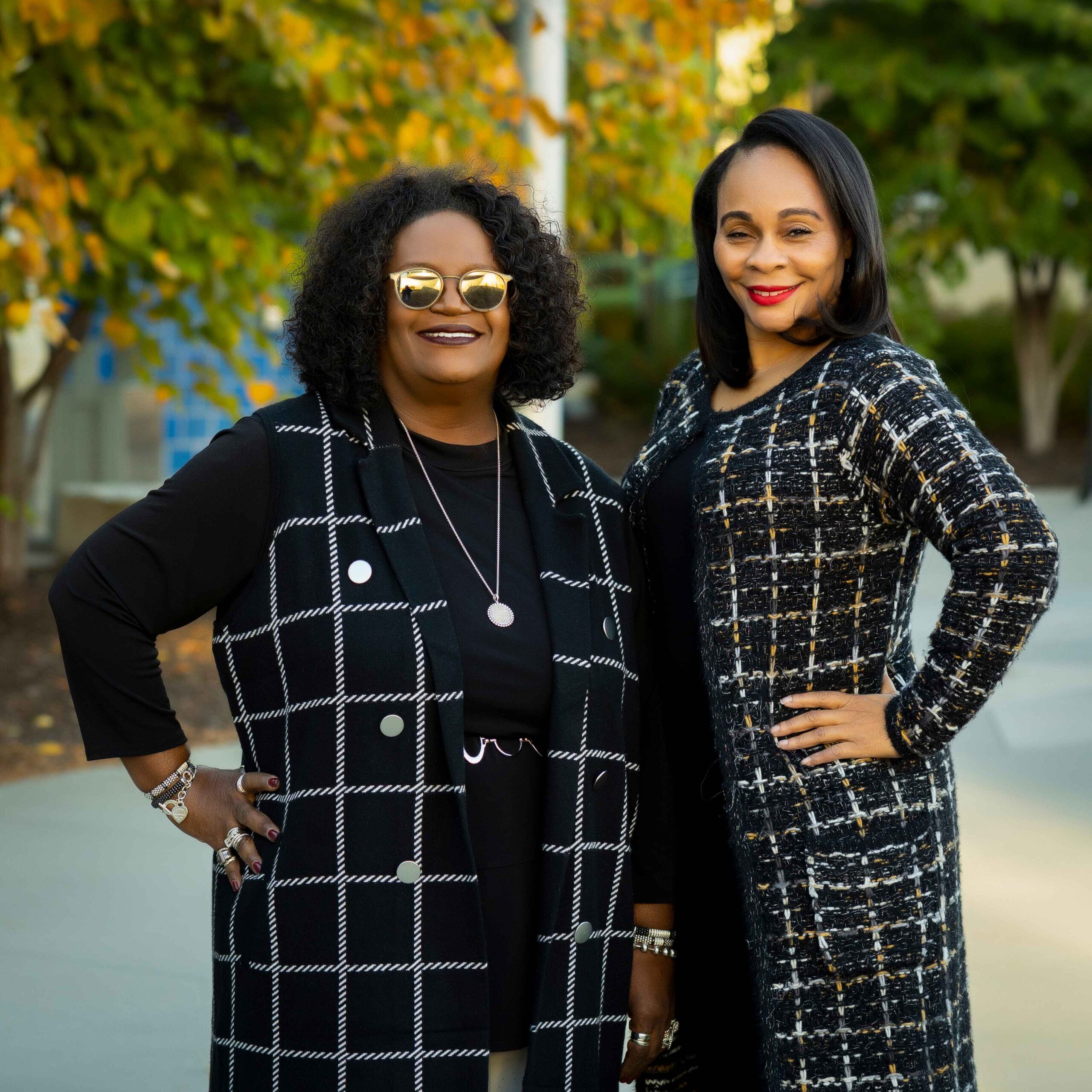

Welcome to another episode of “Ethel’s Diamond Post.” As Thanksgiving Day approaches, I want to sincerely thank you for your trust and support, as you are valued and appreciated at VZD CAPITAL MANAGEMENT, LLC. Your ongoing engagement helps us serve you better and stay aligned with your financial goals. While I understand that everyone’s story is different and that unforeseen challenges may arise, the fact remains that we are still here. I am committed to meeting upcoming deadlines for new legislation, including retaking an industry test and completing continuing education, which I believe will help us grow and improve. Additionally, I think everyone should take vacation time to reflect on the year, recognize blessings we should never take for granted, and spend quality time with the people who matter most—letting them know how much they mean to us. We often get “caught up” in our daily lives and routines and forget about the less fortunate or those who might be silently suffering with chronic health issues. Plus, it is a time to remember those struggling with food insecurity or financial hardship that the recent government shutdown might have worsened.
How many people were impacted by the recent market pullback? What’s the best approach when stocks keep rising rapidly? Given the severity of the sell-off, many individuals either participated in the “panic” sell-off or hesitated to buy stocks that went “on sale” during the downturn. At VZD CAPITAL MANAGEMENT, LLC, we view the capital markets as seasonal, and understanding market cycles helps you feel more confident and aligned with your investment strategy. Recognizing how market cycles influence different risk tolerances is essential for investors. The stock market is cyclical, moving between bull and bear markets. Therefore, diversification, rebalancing, and rotation are vital tools we depend on through different market phases. The capital markets require a long-term perspective and an understanding that markets don’t move together all the time. We believe that American companies will continue innovating, and American consumers will keep spending to support the economy and help investors find companies that will grow over time.
VZD does not receive a memo or advance notice when downturns happen, but we understand they are part of the process. This understanding helps you feel more at ease and patient during market swings. We see these as periods of sharp pullbacks and prolonged lows, not signs of economic collapse. Like Warren Buffett, we believe that forecasting is unreliable because there aren’t crystal balls that can accurately predict short-term market moves. Our main goal is to assess whether markets are overvalued and to be ready for corrections, rather than trying to predict the market’s direction. We want you to feel confident that patience and waiting for bargains are good strategies for reducing volatility and protecting your wealth during market swings. This approach encourages you to stay focused on your long-term goals despite short-term fluctuations.
As year-end approaches, we collaborate closely with clients and their tax advisors to coordinate efforts to reduce both short- and long-term income tax liabilities. The first strategy is tax harvesting, which involves offsetting gains with available losses. For example, consider realizing losses on underperforming stocks to offset gains from other investments. We also recommend making full contributions to qualified retirement plans or self-directed accounts. For instance, did you know that as of August 27, 2025, the United States spousal IRA rules and limits remain unchanged? Married couples filing jointly can still contribute to an IRA for a spouse with little or no income, as long as the other spouse has enough taxable compensation to cover both contributions. For 2025, each spouse can contribute up to $7,000 if under age 50, or $8,000 if age 50 or older (including the $1,000 catch-up). This approach can help maximize your retirement savings while staying within IRS guidelines. Review your year-end tax strategies now to ensure you’re taking full advantage of available opportunities.
Speaking of retirement contributions, the IRS has announced higher contribution limits for 2026, offering an excellent opportunity to build long-term financial security through steady savings and compound interest. If you don’t have access to workplace retirement plans, IRAs remain a valuable option. Before increasing your deductions, ensure you have an emergency savings fund and have paid off high-interest debt. Next year, the IRS will raise the contribution limits for qualified retirement plans from $23,000 to $24,500. For workers over 50, an additional catch-up contribution of $8,000 is permitted, bringing the total to $32,000 annually for older savers. For those aged 60 to 63, the higher catch-up contribution limit stays at $11,250, bringing the total to $35,750. This is a positive step toward securing your future.
Business owners and self-employed professionals might find that some plans offer high contribution limits and significant tax savings. In 2026, the Solo 401(k) and SEP-IRAs have an employee deferral contribution limit of $24,500. The total contribution cap is $72,000. There is an $8,000 catch-up contribution for those aged 50 and over. For individuals aged 60–63, the special catch-up limit is $11,250. At VZD, we advocate making contributions to retirement plans because inflation erodes the value of the dollar over time, and the more you save for retirement, the better. We usually ask clients and prospects about their highest income in the past 10 years and then multiply that by 10 to estimate how much in assets you’ll need before fully retiring, based on your standard of living.
Charitable contributions can significantly reduce taxes in 2025 by offering deductions that lower taxable income. Donations to qualified charities are deductible from your taxable income, which could decrease your overall tax bill. Taxpayers who itemize deductions may gain more from charitable giving, as these donations can make up a sizable portion of their itemized deductions, especially for those in higher income brackets. Donating appreciated securities to decrease taxes and boost donations can be especially beneficial, supporting nonprofit organizations that aid the less fortunate and help rebuild communities affected by unexpected weather events.
The most significant debate on Wall Street centers on the future of artificial intelligence (AI). After years of rapid growth, some investors have become cautious, avoiding major players in the sector due to concerns about slowing expansion and a potential bubble. Nonetheless, the Nasdaq posted its most significant one-day gain in six months on Monday as investors bought tech stocks after weeks of selling, driven by concerns over high valuations and substantial AI investments by big companies. Wall Street predicts a 25-basis-point interest rate cut by the Federal Reserve next month. However, with Black Friday season approaching, the outlook suggests strong spending, with estimates indicating total spending could reach around $80 billion in the U.S. We remain cautious about these forecasts because of ongoing inflation, President Donald Trump’s recent wave of tariff hikes, and the possibility that shoppers may not be eager to splurge this season. Debt issues are impacting more consumers across all income levels. For many Americans, wage gains have not kept pace with persistent inflation, making it difficult to make ends meet each month. The recent government shutdown, which lasted 43 days—the longest in government history—has worsened food insecurity, caused job and wage losses, and led to a mandatory decrease in airline traffic due to a lack of workers.
So, what does all of this mean, and how will these factors impact the capital markets in the short- and long-term? We are optimistic but cautious; therefore, diversification, rebalancing, and increasing cash reserves are key strategies for our long-term success. Since the beginning of the century, portfolios with at least 10% in gold have proven to be both prudent and rewarding. Gold has outperformed the S&P 500 80% of the time. We will continue to seek out companies in asset classes that haven’t been appreciated since the rise of AI and the focus on technology infrastructure. Meanwhile, cash might seem like a safe place to keep your money. However, holding too much can hinder building your long-term wealth, especially if it means not owning stocks, which are the growth engine of a portfolio. In other words, that pile of money can buy about half of what it could three decades ago. Meanwhile, $10,000 invested in the S&P 500 index would be worth about $92,600, a return of roughly 82.6%, according to BlackRock, an asset manager. Therefore, VZD recommends keeping some cash on hand for emergencies or short-term savings toward purchases such as a car or a house. Households should generally hold 2 to 6 months’ worth of additional cash in an emergency fund to cover unexpected financial disruptions. Some people, especially those in high-risk industries with frequent layoffs, should have more.
Some consumers are experiencing financial hardships because their incomes haven’t kept pace with inflation over the past five years, causing a decline in purchasing power as prices have risen sharply. Meanwhile, high-income earners have improved their financial situations through gains in the stock market and rising home values. Their discretionary income remains robust, supporting spending on cars, homes, vacations, and dining out. However, during Black Friday and Cyber Monday week, higher-income households plan to reduce their spending due to economic uncertainty.
We remain optimistic about ending the year with positive returns despite recent increased volatility. People buy generators as a backup for electrical outages — it’s their safety net when power is disrupted, but life still goes on. The same principle applies to the capital markets: investors should want to stay invested but may need a backup plan, such as rotating into defensive stocks. These stocks are often overlooked when the market rises and volatility slows down. The stock market frequently changes direction. If you are on the sidelines during the first day or two of rebounds, your return or performance may be considerably lower. This supports the philosophy of staying invested and avoiding market timing. The S&P 500 index includes 11 sectors, some of which may be affected more than others. Remember, the stock market is not limited to the U.S.; there are exchanges all around the world. Stock markets are not always in sync; they are often tied to the local economy as well. If the U.S. stock market is falling, it might be rising elsewhere in the world.
I am honored to be a member of the MSN.com “Top 10 Self-Made Women in November 2025.” Additionally, we have been selected as a 2026 Five Star Wealth Manager and will be featured in the February 2026 edition of KC Magazine. As always, we thank you for the trust and confidence you have placed in us. We are always eager to serve and would welcome the opportunity to talk to others who might be a good fit for our boutique, family-oriented firm. Stay well, safe travels, and have a wonderful Thanksgiving weekend.
With Gratitude,
Ethel and Nikisha